Showing posts with label energy. Show all posts

Sunday, January 8, 2012

GE Energy Innovation Summit - Multidisciplinary and Accelerated

I had the opportunity to design, convene and execute a two day, first one of its kind, multidisciplinary GE Energy Innovation Summit with an elite team of GE Energy engineers. I have been impressed with the fact that GE Energy chose to lead such a transformational activity, yet more so, I have been working with some of the best engineering minds in the industry here.

The Summit brought together ten external world leaders in areas from government policy and oil and gas to data analytics, top tier academia and successful entrepreneurs. They were joined by ten GE Energy leaders from Marketing, Systems Engineering, and Advanced Technology Operations. Our goal was to create two energy concepts for GE Energy products and services that are 3 to 5 years out and can be taken forward to conduct proof-of-concepts.

Not only did the Summit deliver the concepts, it created two solutions with clear value to the company and its customer for the future as well as business models to take the solutions forward. Most importantly, during the summit senior leadership committed funding for these solutions on the spot.

Wednesday, August 31, 2011

Energy Storage and Charging Innovations

Here are a few research and maturing technologies for commercialization into mass market.

From Fast Company here, "Batteries That Run On (And Clean) Used Toilet Water":


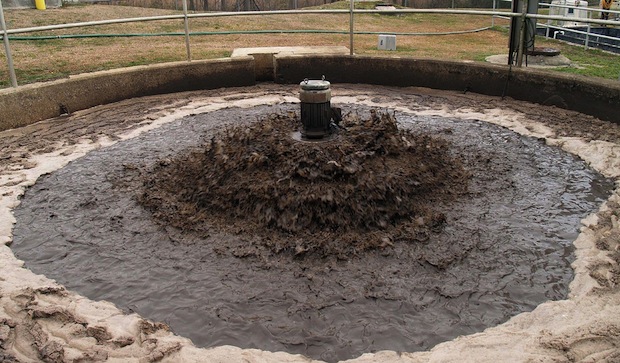
"Environmental engineer Bruce Logan is developing microbial fuel cells that rely on wastewater bacteria's desire to munch http://www.blogger.com/img/blank.gifonhttp://www.blogger.com/img/blank.gif organic waste. When these bacteria eat the waste, electrons are released as a byproduct--and Logan's fuel cell collects those electrons on carbon bristles, where they can move through a circuit and power everything from light bulbs to ceiling fans. Logan's microbial fuel cells can produce both electrical power and hydrogen, meaning the cells could one day be used to juice up hydrogen-powered vehicles."

From Wired's Gadget Lab here, "Power the Stereo by Driving Through Potholes":


"By drawing energy from vibrations, tiny sheets of piezoelectric material can provide free power to anything that moves or shakes. The battery-less sensors can take the motion from a car on bumpy asphalt or a loaded clothes dryer, for example, to give supplemental energy to a device.

Piezoelectric technology has been around since the late 19th century and can be found in microphones and phonographs working under simple principles. Under kinetic stress, crystals on a sheet of piezoelectric material become electrically polarized, which produces energy.
"

From the NewScientist Tech here, "Metal droplets could put power in your step":

"The energy lost as heat while you walk is enough to power a small light bulb, but previous attempts at turning walking into wattage are too low-powered to be useful. Now an energy-harvesting technique based on the flow of microscopic liquid droplets promises much higher power levels, and could let you charge your smartphone with a stroll.

Tom Krupenkin and Ashley Taylor, engineering researchers at the University of Wisconsin, Madison, based their new technique on the principle of electrowetting. Here, the shape of a liquid droplet sitting on a liquid-repelling surface is changed by applying voltage to the surface.
"

Friday, July 22, 2011

US Grid Improvement to Incorporate Renewables

The New York Times reports that the Federal Energy Regulatory Commission unanimously approved a rule Thursday that establishes guidelines "for planning and paying for new power lines, part of a long-term policy effort to help the nation's electricity grid grow enough to meet the demands of renewable energy and a competitive electricity market." The rule "is intended to push the organizations that manage the grid into cooperating with one another, so that developers can build power lines across several states and multiple electrical jurisdictions." However, it "does not specify what the formula should be for allocating costs, or precisely how new lines should be planned."

The Wall Street Journal published that FERC Chairman Jon Wellinghoff said Thursday that the new order will benefit wind and solar energy projects in particular, because they are often located in remote areas and lack access to existing interstate transmission lines. The rule will allow companies other than local utilities to take part in transmission projects, with the hope that the removal of such barriers will increase competition and lower costs.

Sunday, February 20, 2011

How green was my Valley!

As the president of TIE Carolinas, an entrepreneurial non-profit, I engage with business men and women from across the world. A trend is clear and omniscient - the world at large, specifically Asia and Africa, have a populace that is aspirationaly committed to improving their lot... from the mother living in the Mumbai ghetto whose girls are working as data entry clerks to the Asian billionaires building the 21st century multi-nationals. I do not find it true of business men and women in the USA, where I have found the entrepreneur unable to "dream" for the past three years... dreams, which are essential to risk taking. Are things improving... they will and can though in a new paradigm yet to emerge.

Thanks to Financial Times for an excellent analysis of the reality of technology driven leadership and entrepreneurism in the the USA... Mr. Richard Waters writes in "A dip in the valley" - "Early stage investors appear to be losing interest in the painstaking work needed to sustain America's lead in the advanced industries that can generate many future jobs."

An example showcasing a macro trend in full swing (though it impacts micro economics as well) is: "When Massachusetts came up with $58m of incentives in 2008 to encourage Evergreen Solar to build a plant, it looked like the US state had found a new lease of life for a disused military base. Until last week, that is. Evergreen is shutting the facility with the loss of 800 jobs. The future location of Evergreen’s wafer making: a plant in Wuhan, China."

[Click to enlarge the graphic in the right.]


Again I am reminded of Gordon Moore's (Intel co-founder) lament that chasing returns has left a gap in invention in the USA. More strongly worded though is: "The belief that American individuality and creativity somehow assure future leadership is “a clear exposition of the arrogance of empire”, warns Michael Moritz, one of the Valley’s leading start-up financiers. Freed of “the debilitating effects of affluence”, he adds, “the need to succeed is far greater in the emerging economies”."

The article discusses US's inability to turn out enough engineers, decreasing share of its world R&D spending, sense of decline in the US, some of the existing invention's business being lost to Asia (ex: LED), etc. The article documents Mr. Moritz statement,"A company that loses its ability to develop its own manufacturing is on the road to oblivion."

And of course, such a conversation cannot end without evaluating current and desired policy - One area being talent, growing it, acquiring it and maintaining it: "Sophie Vandebroek, a Belgian engineer who moved to the US in the mid-1980s to train, says that at the time it was “the place to be – this was where the hot research was happening”. Ms Vandebroek stayed and eventually became chief technology officer at Xerox – in spite of the low status accorded to engineers in the US: “It’s kind of at the bottom of the professions.” Now, she and others warn, US immigration rules that make it harder for foreign students to stay, along with the availability of good jobs at home, are causing the country to leach much-needed foreign workers."

The second, the conduction of business: "If it is not to become left behind in businesses such as [solar, energy storage, green tech], the industry’s leaders say, it is time for a policy rethink. “Simply put, the US needs to decide it is ‘open for business’ and willing to compete in the global marketplace for factories and jobs,” says Paul Otellini, chief executive of Intel. “Costs are higher here, not driven by labour rates but rather by lack of incentives or tax credits that are available to US corporations in most other countries.” Without education reform, there will be a “critical engineering skills gap [that] will ultimately translate into fewer jobs and inventions in this country”."

The article concludes with the Valley still has a spark, "But for the country at large, it would not pay to take that much for granted."

See the complete article here.

Thursday, May 20, 2010

Desertec: Solar and Wind Energy

A project to generate energy for Europe from North Africa is being initiated by Desertec, see here.  Financial Times writes:


"... the most ambitious solar project is in north Africa. The Desertec Industrial Initiative is a plan to build a vast network of solar power plants and wind farms, covering the desert and stretching for hundreds of miles, and connected to an advanced electricity grid that will carry power generated round or under the Mediterranean sea to feed Europe’s appetite for energy.

Desertec – backed by a coalition of more than 10 big name companies, including Munich Re, the German insurer, Deutsche Bank, utilities RWE and Eon and Siemens – is likely to cost about $400bn (€302bn, £262bn). If successful, the project could supply as much as 15 per cent of Europe’s electricity needs by 2050.
"

What I found interesting is Desertec's request for donations for the project via the web, see here.  Desertec is empowering the individual to act through a validated message of need, yet the value needs to be made clear for the "call to action" to be advocated.

Monday, April 19, 2010

Energy through Nuclear Power in the GCC

Saudi Arabia is planning to develop a civilian nuclear and renewable energy center, see an article in Arabian Business here.  Interesting to note that Saudi Arabia uses 1.25m barrels of oil each day where the price of a barrel is $5, see Financial Times article "Saudi Arabia announces nuclear centre" here.

On the nuclear technology acquisition front, Saudi Arabia is in talks with France, while Kuwait has already signed a deal with France on developing a nuclear energy project, see here.  And UAE recently signed a $20b nuclear deal with South Korea, see here.

Nuclear remains the cheapest (~6c/kwh), green and most available on-demand alternative energy today... yet the technology improvements are going to bring solar down further from (~20c/kwh) in the next few years.

The fun begins when mass energy stores become available!

Update: Areva, the French owned nuclear group, will be doing fund raising of ~$4b through mostly Middle Eastern and Asian investors. 

Monday, April 20, 2009

Biofuels - Did the Consumer Know or Ask?

One of marketing's various roles is to enable the target consumer to be educated about what the product or service provides and why it will help alleviate their pain. Similarly, marketing is a tool to create perceptions that at times are contentious. Biofuels is an interesting sector where new data and numbers will require either consumer education or perception building on the part of manufacturers and retailers to clarify information that is "contentious". This is going to be an interesting sector to watch that has delivered consumer innovation to alleviate the pain, or has it? You be the judge.

"[International Council for Science] ... supports some controversial findings published in 2007 by Paul Crutzen of the Max Planck Institute for Chemistry in Mainz, Germany. Dr Crutzen concluded that most analyses had underestimated the importance to global warming of a gas called nitrous oxide (N2O) by a factor of between three and five. The amount of this gas released by farming biofuel crops such as maize and rape probably negates by itself any advantage offered by reduced emissions of CO2."

States the article in the Economist article "Biofools" here. Currently, on average up to 10% Ethanol produced from corn is included in petrol sold in the USA. A few statistics on Ethanol that are helpful in alleviating misconceptions in an article at the CATO Institute "Ethanol Makes Gasoline, Costlier, Dirtier" here.

Yet, as published on the Wall Street Journal Blogs "E-corn-omics: Ethanol vs. Gasoline vs. Food" here:

"... for now the CBO (Congressional Budget Office) is leaning toward ethanol’s corner. Based on research from the Argonne National Laboratory, the CBO says U.S. corn ethanol, as currently produced, amounts to a 20% reduction in lifecycle greenhouse-gas emissions compared with gasoline."

The above data and political decisions may be in contention but the true impact of producing biofuels brings the issue closer to home when one considers its water consumption, see an excellent article in the Economist "Sin Aqua Non" here. It states:

"... climate change has persuaded western governments to subsidise biofuels, which could prove as big a disaster for water as they already have been for food. At the moment, about 2% of irrigated water is used to grow crops for energy, or 44km3. But if all the national plans and policies to increase biofuels were to be implemented, reckons the UN, they would require an extra 180km3 of water."

Does the intelligent "community" of consumers of energy know the depth of impact caused by biofuels? Or do the "crowds" of consumers hurl and herd themselves at what some said should be done? See my discussions on debunking the myth of wisdom of the crowds among these blogs.

Tuesday, September 2, 2008

Water thins - Air will be rarer

Brilliant presentation by way of Steve Levin at SlideShare.

Water shortages at a massive scale may arrive before the energy crisis hits home... yet who could have predicted we will be buying water 20 years ago, where today it is approx. $13B industry in the USA.

I believe we will be buying air in the metropolis of the world by mid-century on retail... wonder if air can become a CPG / FMCG product just like water? I am confident it will.

Enjoy!