"Have fun, do good and the money will follow," is Sir Richard Branson's new equity. The Economist's Schumpeter discusses Sir Richard's various activities which it considers to be perhaps redefining captialism. Some of his significant efforts include the Carbon War Room here and The Elders here.
Sir Richard's most recent effort, the B Team, "The idea is to form a small group of business leaders who will campaign for reforms to make capitalism more oriented to the long term and socially more responsible."
Who qualifies for such a rehaul of capitalism?
"There were too few candidates from the business world of sufficiently unimpeachable character, it seems, and, more positively, some members of the B Team are likely to be relatively young. Instead, the plan is for the B Team to consist of people who have done business in a way that fits the guiding principles, such as Mr Zeitz, perhaps Ben Cohen (of Ben & Jerry’s ice cream) or Paul Polman, who is trying to double Unilever’s revenues while halving its environmental footprint."
This effort will be worth keeping a close eye on. I believe it may just be the right time for the vision of the B Team. And a successful entrepreneur is one who times it right. Sir Richard is one who understands "timing" of opportunity well.
Read the complete article "Call in the B Team" here.

Sunday, October 7, 2012


Wednesday, October 3, 2012
Entrepreneurial high-tech industry growth declines in the US
My last blog was about the value of skilled immigrant's driven knowledge creation and its impact on economic growth in the US, see here.
This progress has had a decline per a recent report. From "Why Immigrant Entrepreneurship Is Stalling" in Bloomberg Business Week here:
"In Silicon Valley, it declined from 52.4 percent to 43.9 percent during the same period. Kauffman extrapolates that tech firms with immigrant founders employed about 560,000 workers and generated an estimated $63 billion in sales from 2006 to 2012. Native-born entrepreneurs aren't making up the difference. Their startup rate has remained relatively flat over the last 16 years, and declined in 2011, according to Kauffman's most recent index that tracked new business creation from 1996 to 2011."
See further coverage in media in the following: Washington Post here, and Forbes here.
Entrepreneurs; an essential ingredient to economic growth
"America also used to have one of the most business-friendly immigration policies. Fully 18% of the Fortune 500 list as of 2010 were founded by immigrants (among them AT&T, DuPont, eBay, Google, Kraft, Heinz and Procter & Gamble). Include the children of immigrants and the figure is 40%. Immigrants founded a quarter of successful high-tech and engineering companies between 1995 and 2005. They obtain patents at twice the rate of American-born people with the same educational credentials. But America’s immigration policies have tightened dramatically over the past decade, a period in which some other rich countries, such as Canada, have continued to woo skilled immigrants, while fabulous new opportunities have opened up in emerging markets like China and India. Why endure America’s visa obstacle course when other countries are laying out the red carpet?"
Entrepreneurs and entrepreneurial innovations have remained the key ingredient in United States economic strength. US stands alone in this race as no other nation even comes close to what has been accomplished here. The Economist article "Fixing the capitalist machine" here, further highlights the impact of immigrants on the US knowledge economy.
Will this fertile land of knowledge and innovation sustain or has it seen its best days?
Friday, September 28, 2012
Does US remain the productivity leader?
The article "Hard times, lean firms" in The Economist here states:
 "Far less attention has been paid to the flip side of the jobless recovery: the remarkable improvement in American productivity. How long can this continue? “I see no limit,” says William Hickey, the boss of Sealed Air, a packaging-maker. Is he right to be so optimistic?"
At a high level labor productivity is defined as the output per hour. But this productivity during the economically difficult times have come as a result of "First, workers are terrified of losing their jobs. This makes it easier to persuade them to put in extra hours or shoulder new tasks. Even in unionised firms, there have been reports of greater flexibility. Workers have been staying on the job longer rather than “featherbedding” their hours by, for example, queuing up early to clock off as soon as the shift ends."
It is difficult to find a global company today where the stress is not high all the way down to the lowest levels.
Interestingly, the CEO of the corporations may find it lonely at the top, but according to Jennifer Lerner on the research team at Harvard which studied middle to high level officials from government, the military, business and nonprofits, states that the executive levels don't feel stressed or much less so than middle management. Read details here.
The Economist article gives a second reason, "... tough times are forcing firms to strain every brain cell to become more efficient."
Can this be sustained,specifically in light of a global push to compete among the emerging countries for the same opportunity? "But all such advantages are temporary. As Mr Hickey points out, a factory that Sealed Air opened in Mexico was expected to be far less productive than one in America, but within four years had caught up."
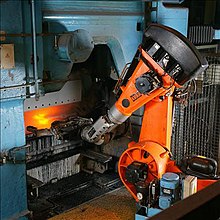 "Far less attention has been paid to the flip side of the jobless recovery: the remarkable improvement in American productivity. How long can this continue? “I see no limit,” says William Hickey, the boss of Sealed Air, a packaging-maker. Is he right to be so optimistic?"
At a high level labor productivity is defined as the output per hour. But this productivity during the economically difficult times have come as a result of "First, workers are terrified of losing their jobs. This makes it easier to persuade them to put in extra hours or shoulder new tasks. Even in unionised firms, there have been reports of greater flexibility. Workers have been staying on the job longer rather than “featherbedding” their hours by, for example, queuing up early to clock off as soon as the shift ends."
It is difficult to find a global company today where the stress is not high all the way down to the lowest levels.
Interestingly, the CEO of the corporations may find it lonely at the top, but according to Jennifer Lerner on the research team at Harvard which studied middle to high level officials from government, the military, business and nonprofits, states that the executive levels don't feel stressed or much less so than middle management. Read details here.
The Economist article gives a second reason, "... tough times are forcing firms to strain every brain cell to become more efficient."
Can this be sustained,specifically in light of a global push to compete among the emerging countries for the same opportunity? "But all such advantages are temporary. As Mr Hickey points out, a factory that Sealed Air opened in Mexico was expected to be far less productive than one in America, but within four years had caught up."
Thursday, September 27, 2012
World's tiniest capacitor
One of my very first jobs out of college was at Murata, a Japanese electronics company I had never heard of. And then I discovered that its products were in just about every electronics device.
 Murata manufactures "Capacitors, which store electricity, are used in just about every type of gadget -- smartphones, laptops, parts for hybrid cars, medical equipment and digital cameras. Smaller components allow for other innovations and improvements, from thinner devices to longer battery life."
"The latest capacitor, measuring 0.25 millimeter by 0.125 millimeter, is as tiny as the period at the end of this sentence."
Imagine the impact on miniaturization of existing consumer products. Right off I can imagine health and medical applications and monitoring embedding electronics solutions for the life of a patient.
Wednesday, September 26, 2012
Universities: China growing, Russia shrinking
Interesting news from the world of higher education in Asia:
 From The China Daily here: "Figures from the Ministry of Education show that over 290,000 overseas students studied in China in 2011, a 10.3 percent increase since 2010. Among the students, 118,837 of them are studying for a degree, accounting for 40.6 percent of the overall international student population, which has increased 10.62 percent from 2010."

From The Moscow Times here: "The bill aims to cut the number of higher educational institutions, leaving a smaller cadre of better-funded universities that pack a more powerful punch in international rankings."
From The China Daily here: "Figures from the Ministry of Education show that over 290,000 overseas students studied in China in 2011, a 10.3 percent increase since 2010. Among the students, 118,837 of them are studying for a degree, accounting for 40.6 percent of the overall international student population, which has increased 10.62 percent from 2010."From The Moscow Times here: "The bill aims to cut the number of higher educational institutions, leaving a smaller cadre of better-funded universities that pack a more powerful punch in international rankings."
Monday, September 24, 2012
Innovation's purpose; to deliver agility and flexibility
Let's assume I am leading a product development effort of an automobile for the US market and it is 2007. My product assumptions are based on data that is probably 12 to 72 months old, one assumption being that oil prices will remain low within the US market. Finally, let's say I am half-way through the development of the product.
How do I now change course when the oil prices have sky rocketed resulting in the fact that the consumer and large corporate customer base I had planned to sell to have decreased by 75% overnight? See one of my previous blog's showcasing innovation in automotive manufacturing here.
Christensen's Innovator's Dilemma implies that I will do all in my power to keep the project going, to make sure it ends one way or another, and that it looks like a success. Such is the conundrum of 20th century based product development, which is anchored in detailed analysis of the past, and an inability to comprehend the future. Such product development's focus is efficiency and effectiveness. And there are quite a few examples in the market place in the last ten years to prove this consideration that has led to various companies demise or bankruptcy.
The question is how do I become flexible and agile, where my company can make quick turns ahead of the market, and does not make commitments that cause it to be rigid and unable to respond to the customer need. Further, how do I become such that I show the customer what they need versus the customer asking me?
 The solution to this enigma is the definition of innovation for a Global Fortune 1000. Where in contrast the perfected approaches of product development deliver continuous improvement embedded in efficiency (cheaper, faster, better) and effectiveness (the customer receives the promise of the product).
So, what is the definition of innovation for a global corporation? To solve the Innovator's Dilemma, perhaps Confucious had the answer:
"When it is obvious that the goals cannot be reached, don't adjust the goals, adjust the action steps."
How do I now change course when the oil prices have sky rocketed resulting in the fact that the consumer and large corporate customer base I had planned to sell to have decreased by 75% overnight? See one of my previous blog's showcasing innovation in automotive manufacturing here.
Christensen's Innovator's Dilemma implies that I will do all in my power to keep the project going, to make sure it ends one way or another, and that it looks like a success. Such is the conundrum of 20th century based product development, which is anchored in detailed analysis of the past, and an inability to comprehend the future. Such product development's focus is efficiency and effectiveness. And there are quite a few examples in the market place in the last ten years to prove this consideration that has led to various companies demise or bankruptcy.
The question is how do I become flexible and agile, where my company can make quick turns ahead of the market, and does not make commitments that cause it to be rigid and unable to respond to the customer need. Further, how do I become such that I show the customer what they need versus the customer asking me?

So, what is the definition of innovation for a global corporation? To solve the Innovator's Dilemma, perhaps Confucious had the answer:
"When it is obvious that the goals cannot be reached, don't adjust the goals, adjust the action steps."
Monday, September 17, 2012
Thiel Fellows - Attempting Breakthroughs
"[The Thiel Fellowship] rewards smart young people for not going to college and, instead, diving into the real world of science, technology and business."
"Since 2010, he has been bankrolling people under the age of 20 who want to find the next big thing — provided that they don’t look for it in a college classroom. His offer is this: $50,000 a year for two years, few questions asked. Just no college, unless a class is helpful for their Thiel projects."
"A cool hundred grand, no strings attached? You won’t be shocked to learn that it is harder to get a Thiel Fellowship than it is to get into Princeton."
I previously wrote about the Milner Prize here which challenges the ethos of the Nobel prize to some extent. Above is an example of the Thiel Fellowship that asks the creative and young to do what they love, if they qualify. Read further here at New York Times.
Below is a counter point, do you agree?
"Anthony Carnevale, director of the Center on Education and the Workforce at Georgetown University, says that the fellowships themselves are nice, but that the message is destructive. “These very unusual and talented kids are in a very high-powered learning environment,” Mr. Carnevale says. “They’re enormously privileged people who’ve been allowed to develop all their horsepower with no constraints. I think it makes you an odd duck.”"
Sunday, September 16, 2012
Creativity and Misfits
 "Speaking of internet firms founded in the past decade, Peter Thiel, an early Facebook investor, told the New Yorker that: “The people who run them are sort of autistic.” Yishan Wong, an ex-Facebooker, wrote that Mark Zuckerberg, the founder, has “a touch of Asperger's”, in that “he does not provide much active feedback or confirmation that he is listening to you.” Craig Newmark, the founder of Craigslist, says he finds the symptoms of Asperger's “uncomfortably familiar” when he hears them listed."
Schumpeter's article "In praise of the misfits" in The Economist discusses how the most creative minds in the technology driven sector have shown signs of Asperger's, or dyslexia, or ADD, or etc. Read details here.
"Entrepreneurs also display a striking number of mental oddities. Julie Login of Cass Business School surveyed a group of entrepreneurs and found that 35% of them said that they suffered from dyslexia, compared with 10% of the population as a whole and 1% of professional managers. Prominent dyslexics include the founders of Ford, General Electric, IBM and IKEA, not to mention more recent successes such as Charles Schwab (the founder of a stockbroker), Richard Branson (the Virgin Group), John Chambers (Cisco) and Steve Jobs (Apple)."
Saturday, September 15, 2012
P&G - Higher Accuracy in Decisions Through Analytics
While reading old colleague Franz Dill's blog here, who served as P&G's Chief Scientist of Business Intelligence, I was prompted to collect few of Franz's blog posts to highlight Procter & Gamble's leadership in leveraging analytics to drive accuracy in decisions.
Here is the link to P&G's Business Sphere, "... a visually immersive data environment that transforms decision-making at P&G by harnessing real-time business information from around the globe."

Franz also points to an interview with P&G's CIO Filippo Passerini in Information Week. Some insightful snippets from the article are:
"The decision cockpit is focused on forward-looking projections rather than historical reporting, with three-month, six-month and 12-month projected trend lines for market share, cost of goods, and margins. All of the data is drillable, meaning you drop down from the companywide views to study performance by country, region, brand, and product."
"With the success of the decision cockpit, P&G has been able to do away with more than 80% of the company's standardized business intelligence reports, according to Passerini. Most users embraced the new approach as more attractive and usable than spreadsheet-based reports sent by email, but in some cases users had to be "forced over the hump" of reliance on the old reports, he said."
"But there's isn't any one significant component of the decision cockpit or Business Sphere environment that came out of a box. It's a first-class, highly customized, and purpose-built system based on P&G's ambitious vision."
I am confident that if P&G is showcasing the Business Sphere this broadly, then it must be onto the next competitive advantage in analytics already.
Read the rest of the details here.
Friday, September 14, 2012
Sugru - Breakthrough Innovation
I believe that breakthrough innovation is and always has been the domain of the entrepreneur and an incumbent has never delivered Schumpeter's Creative Destruction.
Here is an example of a product and its story to prove the point.
Here is an example of a product and its story to prove the point.
Wednesday, September 5, 2012

Subscribe to:
Posts (Atom)