Showing posts with label fast company. Show all posts

Wednesday, August 31, 2011

Energy Storage and Charging Innovations

Here are a few research and maturing technologies for commercialization into mass market.

From Fast Company here, "Batteries That Run On (And Clean) Used Toilet Water":
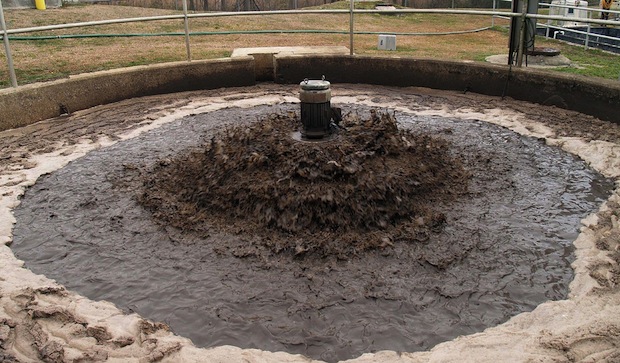

"Environmental engineer Bruce Logan is developing microbial fuel cells that rely on wastewater bacteria's desire to munch http://www.blogger.com/img/blank.gifonhttp://www.blogger.com/img/blank.gif organic waste. When these bacteria eat the waste, electrons are released as a byproduct--and Logan's fuel cell collects those electrons on carbon bristles, where they can move through a circuit and power everything from light bulbs to ceiling fans. Logan's microbial fuel cells can produce both electrical power and hydrogen, meaning the cells could one day be used to juice up hydrogen-powered vehicles."

From Wired's Gadget Lab here, "Power the Stereo by Driving Through Potholes":


"By drawing energy from vibrations, tiny sheets of piezoelectric material can provide free power to anything that moves or shakes. The battery-less sensors can take the motion from a car on bumpy asphalt or a loaded clothes dryer, for example, to give supplemental energy to a device.

Piezoelectric technology has been around since the late 19th century and can be found in microphones and phonographs working under simple principles. Under kinetic stress, crystals on a sheet of piezoelectric material become electrically polarized, which produces energy.
"

From the NewScientist Tech here, "Metal droplets could put power in your step":

"The energy lost as heat while you walk is enough to power a small light bulb, but previous attempts at turning walking into wattage are too low-powered to be useful. Now an energy-harvesting technique based on the flow of microscopic liquid droplets promises much higher power levels, and could let you charge your smartphone with a stroll.

Tom Krupenkin and Ashley Taylor, engineering researchers at the University of Wisconsin, Madison, based their new technique on the principle of electrowetting. Here, the shape of a liquid droplet sitting on a liquid-repelling surface is changed by applying voltage to the surface.
"

Monday, March 1, 2010

Copy and Paste Urbanism - New Songdo

Friend and colleague Franz Dill sends along a great article from Fast Company, "Cisco's Big Bet on New Songdo: Creating Cities From Scratch" here.

Having experienced the building and growth of cities from scratch such as Dubai, a key aspect missing in the article is the fact that humans form societies and the societies revolve around culture.  The success of copied and pasted cities will depend on whether the regime or government supporting the effort is autocratic or democratic.  Autocratic regimes will have a higher success rate with copying and pasting.  A democratic environment that will respect individual rights and choices, either perceived or real, will have a tendency to challenge the status quo represented by the product (city) being replicated.

Replicating cities in democracies will need a substantial marketing budget to be successful!

Also, such cities developed in regions where the qualitative and quantitative value to the inhabitants increases substantially, the success rate for a short period of time will again be good.

In the final analysis, if a people or place defining the cities, regions, or nations do not represent a uniqueness or distinction, after the initial uptick the sustainability of such becomes questionable.

Friday, December 11, 2009

Roger Martin - On Designing the Future

My astute friend from McKinsey, Samvit Kanoria forwards "What's Thwarting American Innovation? Too Much Science, Says Roger Martin", in Fast Company, see here.  The article highlights Mr. Martin's focus on creativity in innovation being a combination of science and design aspects of product or service development working together.

For the scientist, he states - "The future has no legitimacy for analytical thinkers."

Mr. Martin thrashes the large management consulting companies and lays the blame of innovation bottle neck on a corporate structure mired in research and analysis of the past - "But what they analyze is the past.  And if the future is not exactly like the past, or there are things happening that are hard to measure scientifically, they get ignored."

Mr. Martin is asked - "Are you saying that the regression analysis jockeys and Six Sigma black belts have got it all wrong?" and he states - "Well, yes."

Interestingly, my tenure at P&G was during the time Roger Martin was advising A.G. Lafley and I was a part of the substantial changes brought within P&G's approach to business.  See information on some my work related to Virtual Shopper here on my friend Franz Dill's blog, who also was one of the founders of the P&G Innovation Centers.

Though Mr. Martin speaks candidly, yet the change he suggests carries pain to the corporate as a whole and the machinery of suppliers supporting it.  Corporate innovation remains more perception than reality, with incremental results seen in their markets from licensing, buyouts, etc.  Breakthrough innovation remains the domain of the entrepreneur, one who can imagine a future unburdened by the past!