Friday, December 16, 2011

Google patents

Google, Inc.'s awarded patent for "Transitioning a mixed-mode vehicle to autonomous mode" here.

From a BBC News article here:

"Google believe it is a technology that is here and now and will start appearing in motorcars in the near future," said Professor Alan Woodward from the department of computing at the University of Surrey.

"We already have systems that park your cars for you and automatically brake - the next obvious step is to have cars take over the routine driving.

"Google has funded a lot of this work at universities. Not surprisingly, if they think it is going to be big they want to patent it."

Thursday, November 17, 2011

Innovation through Corporate and Academic Engagement

Measuring innovation ROI when corporations work with academia can sometimes be difficult. While one is driven to provide revenue generating results measured on a quarter to quarter basis, the other has goals of pedagogy and scholarship.

Here is an example of a success between Boeing and University of Washington on the 787:

"The key innovation that the UW center supported was a way to make “compression molded” parts from carbon fiber composites for small parts. The method was far cheaper than the regular process of layering long carbon fibers used for air frame components such as hull and wing."

Details here.

Why P&G Remains The CPG Leader

"“Instead of making the easy, wrong choice to scale back our investments, we’ve made the difficult, right choice to continue supporting our innovation and expansion programs as we get pricing and cost savings in place to offset higher commodity costs. We do view this as a short-term choice,” P&G Chief Financial Officer Jon Moeller said in an Oct. 27 conference call."

Read the details here.

IBM: Chips to Think Like Humans

Few years back I decided to get into learning electronics hardware implementations as in SmartGrid and firmware applications. I believe that the convergence of soft, firm, and hard-wares is the future and understanding and leveraging this convergence will be key to success for companies that use technology for enablement.

Here is just such an example coming out of IBM, "IBM training computer chip to learn like a human", details here.

"Synapse was designed to learn through experience, find correlations, create hypotheses and remember outcomes. As chips such as Synapse become smarter and smaller, it will be possible to embed them in everyday objects. That portends a future in which the interaction between computer and user is far more natural and ubiquitous."

Saturday, September 24, 2011

Game Theory in Practice: Predicting Events and Action

Autonomy in Products: Sensors, Software, and Robotics

Cars, airplanes, and now farm equipment are autonomous, see details on farm equipment using robotics for autonomy here.

"The driverless system is fully controlled by advanced software and is capable of performing a complete workflow during the harvest process. This includes locating a moving harvester in the field, synchronizing with it, collecting its grain and delivering that grain to trucks near the field for transportation."

I believe the products designed for human control will fundamentally change when the human is not physically managing the system.

Wednesday, September 14, 2011

IBM: Turning IP Into Software

"IBM, last week, announced the creation of the Services Innovation Lab (SIL), a new global lab of 200 technology experts from IBM, that aim to accelerate the expansion of real-time analytics and software automation."

Read detail here. SIL's focus areas will be:
  • Cloud Computing
  • Advanced Analytics
  • Service Delivery Automation
  • Enterprise Mobilization and Smarter Planet

Wednesday, August 31, 2011

Energy Storage and Charging Innovations

Here are a few research and maturing technologies for commercialization into mass market.

From Fast Company here, "Batteries That Run On (And Clean) Used Toilet Water":
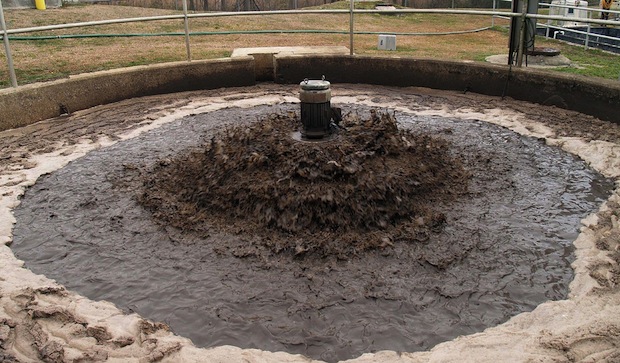

"Environmental engineer Bruce Logan is developing microbial fuel cells that rely on wastewater bacteria's desire to munch http://www.blogger.com/img/blank.gifonhttp://www.blogger.com/img/blank.gif organic waste. When these bacteria eat the waste, electrons are released as a byproduct--and Logan's fuel cell collects those electrons on carbon bristles, where they can move through a circuit and power everything from light bulbs to ceiling fans. Logan's microbial fuel cells can produce both electrical power and hydrogen, meaning the cells could one day be used to juice up hydrogen-powered vehicles."

From Wired's Gadget Lab here, "Power the Stereo by Driving Through Potholes":


"By drawing energy from vibrations, tiny sheets of piezoelectric material can provide free power to anything that moves or shakes. The battery-less sensors can take the motion from a car on bumpy asphalt or a loaded clothes dryer, for example, to give supplemental energy to a device.

Piezoelectric technology has been around since the late 19th century and can be found in microphones and phonographs working under simple principles. Under kinetic stress, crystals on a sheet of piezoelectric material become electrically polarized, which produces energy.
"

From the NewScientist Tech here, "Metal droplets could put power in your step":

"The energy lost as heat while you walk is enough to power a small light bulb, but previous attempts at turning walking into wattage are too low-powered to be useful. Now an energy-harvesting technique based on the flow of microscopic liquid droplets promises much higher power levels, and could let you charge your smartphone with a stroll.

Tom Krupenkin and Ashley Taylor, engineering researchers at the University of Wisconsin, Madison, based their new technique on the principle of electrowetting. Here, the shape of a liquid droplet sitting on a liquid-repelling surface is changed by applying voltage to the surface.
"

Tuesday, August 16, 2011

Farrokh Mistree - Outstanding Design Educator Award

Having had the honor of working with Dr. Farrokh Mistree for the past five years, what a thrill it is to see this come to fruition:

"(Dr. Mistree) is being recognized for lifelong dedication and numerous contributions to the engineering design community, particularly for instilling a passion for design in generations of students as an inspirational advisor and mentor. He will receive the Ruth and Joel Spira Outstanding Design Educator Award."

Details here.

I can personally attest to Farrokh being one of the few individuals I know who lives the concept of "Sharing to Gain". It was this passion of his that convinced me five years ago to join him in developing "Designing Open Engineering Systems" course at Georgia Tech, along with Dr. Jitesh Panchal, and Dr. Dirk Schaefer.

Farrokh continues to inspire and give of his time freely in sharing to gain!

Tuesday, August 9, 2011

Black gold holds a charge for green cars

From the New Scientist here, new invention may double the charge in a battery:

"In a standard battery, ions shuttle from one solid electrode to the other through a liquid or powder electrolyte. This in turhttp://www.blogger.com/img/blank.gifn forces electrons to flow in an external wire linking the electrodes, creating a current. In Chiang's battery, the electrodes take the form of tiny particles of a lithium compound mixed with liquid electrolyte to make a slurry. The battery uses two streams of slurry, one positively charged and the other negatively charged. Both are pumped across aluminium and copper current collectors with a permeable membrane in between. As they flow the streams exchange lithium ions across the membrane, causing a current to flow externally. To recharge the battery, you apply a voltage to push the ions back across the membrane."

Monday, August 8, 2011

Stepping "around" constraints to "create" anew

An example of leveraging tools combined with unconstrained approaches to innovation.

From Popular Science "Students' Innovative 3-D Vision System Wins Prize" here. Jacob Ward writes:

"In the end, however, we chose the entry from Tsinghua University, China. Five students there built an entirely new 3-D imaging system. They conquered the classic glasses-or-no-glasses problem by simply stepping around it: instead of a conventional flat screen, they built a four-sided glass enclosure which displays the four sides of a simulated object. The system scans an object on a turntable, acquires the image data, and reproduces it by projecting the image with four projectors onto four panes of glass. Walk around the simulated object on display, and it’s like walking around it in real life. In addition, the system recognizes gestures, allowing you to rotate and zoom in on an object with your hands. You can imagine the implications for medical analysis, enhanced teaching, point-of-sale displays, and telecommunication.

The thing that blew my mind, however, was the sheer discipline of these kids in dealing with costs. They had developed several alternative systems, they told me, including one that used a rotating mirror and a high-speed projector. But they had given themselves the goal of keeping the thing cheap, and this was the cheapest workable solution.
"