Wednesday, August 31, 2011

Energy Storage and Charging Innovations

Here are a few research and maturing technologies for commercialization into mass market.

From Fast Company here, "Batteries That Run On (And Clean) Used Toilet Water":
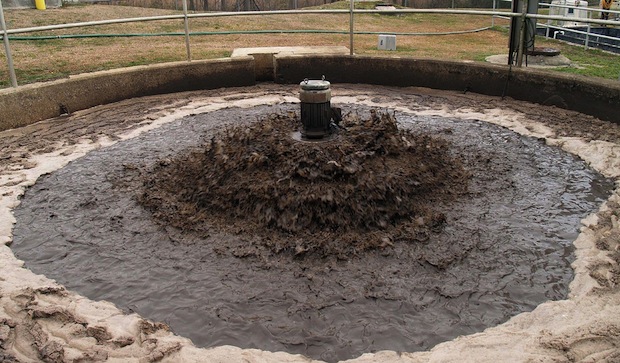

"Environmental engineer Bruce Logan is developing microbial fuel cells that rely on wastewater bacteria's desire to munch http://www.blogger.com/img/blank.gifonhttp://www.blogger.com/img/blank.gif organic waste. When these bacteria eat the waste, electrons are released as a byproduct--and Logan's fuel cell collects those electrons on carbon bristles, where they can move through a circuit and power everything from light bulbs to ceiling fans. Logan's microbial fuel cells can produce both electrical power and hydrogen, meaning the cells could one day be used to juice up hydrogen-powered vehicles."

From Wired's Gadget Lab here, "Power the Stereo by Driving Through Potholes":


"By drawing energy from vibrations, tiny sheets of piezoelectric material can provide free power to anything that moves or shakes. The battery-less sensors can take the motion from a car on bumpy asphalt or a loaded clothes dryer, for example, to give supplemental energy to a device.

Piezoelectric technology has been around since the late 19th century and can be found in microphones and phonographs working under simple principles. Under kinetic stress, crystals on a sheet of piezoelectric material become electrically polarized, which produces energy.
"

From the NewScientist Tech here, "Metal droplets could put power in your step":

"The energy lost as heat while you walk is enough to power a small light bulb, but previous attempts at turning walking into wattage are too low-powered to be useful. Now an energy-harvesting technique based on the flow of microscopic liquid droplets promises much higher power levels, and could let you charge your smartphone with a stroll.

Tom Krupenkin and Ashley Taylor, engineering researchers at the University of Wisconsin, Madison, based their new technique on the principle of electrowetting. Here, the shape of a liquid droplet sitting on a liquid-repelling surface is changed by applying voltage to the surface.
"

Tuesday, August 16, 2011

Farrokh Mistree - Outstanding Design Educator Award

Having had the honor of working with Dr. Farrokh Mistree for the past five years, what a thrill it is to see this come to fruition:

"(Dr. Mistree) is being recognized for lifelong dedication and numerous contributions to the engineering design community, particularly for instilling a passion for design in generations of students as an inspirational advisor and mentor. He will receive the Ruth and Joel Spira Outstanding Design Educator Award."

Details here.

I can personally attest to Farrokh being one of the few individuals I know who lives the concept of "Sharing to Gain". It was this passion of his that convinced me five years ago to join him in developing "Designing Open Engineering Systems" course at Georgia Tech, along with Dr. Jitesh Panchal, and Dr. Dirk Schaefer.

Farrokh continues to inspire and give of his time freely in sharing to gain!

Tuesday, August 9, 2011

Black gold holds a charge for green cars

From the New Scientist here, new invention may double the charge in a battery:

"In a standard battery, ions shuttle from one solid electrode to the other through a liquid or powder electrolyte. This in turhttp://www.blogger.com/img/blank.gifn forces electrons to flow in an external wire linking the electrodes, creating a current. In Chiang's battery, the electrodes take the form of tiny particles of a lithium compound mixed with liquid electrolyte to make a slurry. The battery uses two streams of slurry, one positively charged and the other negatively charged. Both are pumped across aluminium and copper current collectors with a permeable membrane in between. As they flow the streams exchange lithium ions across the membrane, causing a current to flow externally. To recharge the battery, you apply a voltage to push the ions back across the membrane."

Monday, August 8, 2011

Stepping "around" constraints to "create" anew

An example of leveraging tools combined with unconstrained approaches to innovation.

From Popular Science "Students' Innovative 3-D Vision System Wins Prize" here. Jacob Ward writes:

"In the end, however, we chose the entry from Tsinghua University, China. Five students there built an entirely new 3-D imaging system. They conquered the classic glasses-or-no-glasses problem by simply stepping around it: instead of a conventional flat screen, they built a four-sided glass enclosure which displays the four sides of a simulated object. The system scans an object on a turntable, acquires the image data, and reproduces it by projecting the image with four projectors onto four panes of glass. Walk around the simulated object on display, and it’s like walking around it in real life. In addition, the system recognizes gestures, allowing you to rotate and zoom in on an object with your hands. You can imagine the implications for medical analysis, enhanced teaching, point-of-sale displays, and telecommunication.

The thing that blew my mind, however, was the sheer discipline of these kids in dealing with costs. They had developed several alternative systems, they told me, including one that used a rotating mirror and a high-speed projector. But they had given themselves the goal of keeping the thing cheap, and this was the cheapest workable solution.
"

Thursday, August 4, 2011

Philips Builds a Highly Efficient Light Bulb

"The prize bulb uses just 9.7 watts to match the light output of a 60-watt incandescent, compared with 12.5 watts for the product currently sold. The new lamp is also brighter than the one marketed now, at 910 lumens versus 800 lumens. And it is closer in color to a standard incandescent.

Both lamps last 25,000 hours, compared with 1,000 to 2,000 for a standard incandescent."


Details here at NY Times Green blog.

Friday, July 22, 2011

US Grid Improvement to Incorporate Renewables

The New York Times reports that the Federal Energy Regulatory Commission unanimously approved a rule Thursday that establishes guidelines "for planning and paying for new power lines, part of a long-term policy effort to help the nation's electricity grid grow enough to meet the demands of renewable energy and a competitive electricity market." The rule "is intended to push the organizations that manage the grid into cooperating with one another, so that developers can build power lines across several states and multiple electrical jurisdictions." However, it "does not specify what the formula should be for allocating costs, or precisely how new lines should be planned."

The Wall Street Journal published that FERC Chairman Jon Wellinghoff said Thursday that the new order will benefit wind and solar energy projects in particular, because they are often located in remote areas and lack access to existing interstate transmission lines. The rule will allow companies other than local utilities to take part in transmission projects, with the hope that the removal of such barriers will increase competition and lower costs.

Tuesday, July 12, 2011

US Power Grid

“Let’s see if anyone complains if we eliminate it,” Joe McClelland, head of electric reliability for Federal Energy Regulatory Commission.

To accomodate the variability of renewable power sources like wind and solar, the FERC is considering frequency variations. Now, who keeps time by the grid?

"A lot of people are going to have things break and they're not going to know why," said Demetrios Matsakis, head of the time service department at the U.S. Naval Observatory, one of two official timekeeping agencies in the federal government.

Details here.

Tuesday, June 21, 2011

Chinese Goods and US Prices

"The Chinese supply 78% of the footwear imported into the U.S.; 71% of the ties; 55% of the gloves; roughly 50% of the dresses and baby clothing; and 90% of house slippers, according to Commerce Department data."

The article in Wall Street Journal this morning here. The following chart highlights the trend:


The article ends with a quote from Bernard Leifer, chief executive of SG Footwear:

""There's been a shift in who is holding the cards," Mr. Leifer says. "It used to be that the retailers would demand lower prices. Vendors like us would demand lower prices from the factories. And the factories would generally acquiesce. The whole thing has now flipped. The bottom line is the American consumer is going to end up paying more.""

Tuesday, May 31, 2011

Innovation in cars

I met my friend Mr. Martin Ertl, currently CIO of Bombardier Transportation in 2006 when he was the Head of Innovation Impulses at BMW. He stated to me in one of our conversations that the innovation in cars will now come from the outside. A quote from Martin in "Sectoral Innovation Leaders Showcasing" here is apropos:

"To set itself apart from its competitors, BMW created a decidedly dynamic and sportive image for its products, claiming to build the ‘Ultimate Driving Machine’. “A promise that has to be kept”, says Martin Ertl, Head of Innovation Impulses at the BMW Group Research and Innovation Centre (FIZ): “Without any doubt BMW sells lifestyle. But that’s only part of the story. Selling lifestyle doesn’t work without a product endowed with the appropriate technological substance.”"

Today, Martin's preemption at BMW helping it become the world's no. 1 luxury car brand, is going mainstream. RIM's PlayBook is getting integrated into cars. Cars are becoming an experience where there will be no discontinuity in comfort from home to car to office to car to dinning to car to home ...

See Wall Street Journal's article "RIM hopes cars drive PlayBook sales" here.

Wednesday, May 18, 2011

India: Brand overload

Quote from WSJ article:

"India's store shelves groan under the weight of consumer brands. About 900 new food and beverage brands alone have been launched there in the past two years. Yet while shoppers enjoy ever more choice, it is getting harder for companies such as Procter & Gamble and Hindustan Unilever to preserve profit margins."

Consumer Products Goods sector is going to be a very competitive market in this decade to create large values for investors. The winners will be ones who are Unique versus Distinctive. See my previous blog on the subject here, or win on price points.

Natural gas as automotive fuel

This is fascinating! From the WSJ, details here.